Introduction
Most people who search for Japanese nuru massage know what they want — but almost none know where it came from or why it works the way it does. Behind this globally recognized practice lies a surprising simplicity that demands respect. The term “nuru” is not merely a brand name or a modern wellness invention; it is a specific Japanese word translating to “slippery,” a concept that defines the entire physical technique and its unique application.
Understanding this foundation is essential for making confident, informed decisions about your personal wellness and bodywork. This guide provides a definitive look at the practice, covering the word’s origins, its deep Japanese cultural roots, its historical evolution, and exactly how it transitioned into a highly structured, global wellness service. If you’re new to the topic and want a full overview of the practice itself before diving into its history, start with our nuru massage complete guide.
We believe that clarity removes uncertainty, allowing you to approach your wellness choices safely and professionally. Use the sections below to explore the full history of nuru massage, from ancient Japanese bathing culture to today’s professional sessions.
Table of Contents
What Does “Nuru” Mean? The Japanese Etymology
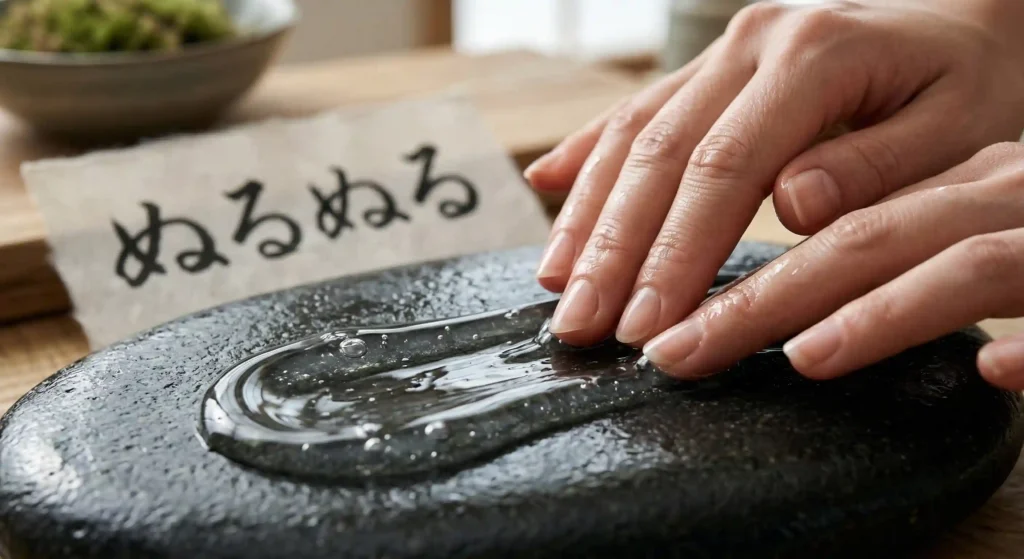
To truly understand the nuru massage origins, you must first understand the word itself. “Nuru” (ぬる / ぬるぬる, pronounced noo-roo) is a Japanese adjective and onomatopoeic word that directly translates to “slippery,” “slimy,” or “smooth-to-the-touch.” The reduplicated form, “nuru-nuru,” is used to intensify this sensation, much like one might say “ultra-slippery” in English. This single word is the key to the entire practice.
The Japanese language has a rich tradition of onomatopoeia, including words known as gitaigo, which describe textures and sensations. “Nuru” belongs to this category, alongside other expressive words like “fuwafuwa” (fluffy) and “tsuru-tsuru” (smooth and glossy). Understanding this linguistic context clarifies that the name of this Japanese nuru massage is not just a label but a functional descriptor. The technique is the sensation. The seaweed-based gel, developed specifically for this therapy, inherited the name because its sole purpose is to create that signature state of slipperiness.
While the word appears in other Japanese compounds, such as nurui (lukewarm) and nureru (to get wet), they all stem from the same family of sensory experiences. Knowing the direct nuru meaning in Japanese helps both practitioners and clients grasp the core principle of the session. The entire experience is built around creating, sustaining, and moving through a state of controlled slipperiness, which is what makes it a distinct and effective wellness practice.
Nuru Massage and Japanese Bath Culture
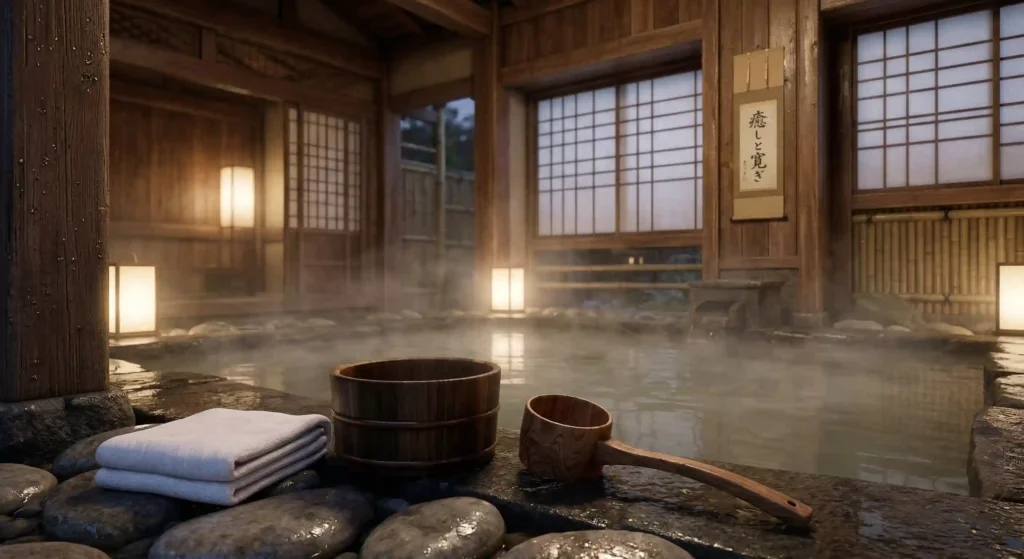
To understand the nuru massage origins, one must look beyond the technique and into the very fabric of Japanese wellness traditions. The practice is not an isolated invention but an evolution rooted deeply in Japan’s sophisticated and long-standing bathing culture. For centuries, the act of cleansing the body has been a central pillar of daily life and social custom, far surpassing simple hygiene. This cultural foundation is the fertile ground from which this unique Japanese bodywork grew.
The tactile quality of the nuru gel—its warmth, smoothness, and fluid motion—is a direct extension of sensations already central to Japanese bath culture. The practice is believed to have developed in the latter half of the 20th century within the sōpurando (soap land) bathhouse industry of Kawasaki. These establishments specialized in water- and body-based bathing services, which evolved over decades into a distinct and structured massage format. The gel-based technique was a natural progression, not an invention from nowhere, mirroring the sensory world of the bathhouse.
This cultural environment normalized a relationship with body contact, temperature, and physical presence that is distinct from many Western norms. Japanese bathing has always been governed by elaborate etiquette and professional norms, and the original nuru massage services operated within these social frameworks. This structure provided defined practitioner roles and session protocols, making it a logical, disciplined practice from its inception and setting the stage for its evolution into a global spa service.
What Is Onsen Culture and Why It Matters Here
Japan’s bathing rituals are centered around onsen (natural hot spring baths) and sentō (public bathhouses). These are not just places to get clean; they are vital social and restorative spaces for relaxation and community. In these settings, communal bathing is a normal, structured activity, fostering an environment where body-focused therapies could be developed and accepted without stigma.
This cultural acceptance of shared physical space and sensory experience is precisely why a practice like a Japanese nuru massage could emerge and become formalized. It created the social and sensory environment in which a professional, full-body contact therapy could be normalized and appreciated for its wellness benefits. This context is essential to understanding nuru massage as a legitimate therapeutic tradition.
How Japanese Nuru Massage Evolved into a Modern Spa Service
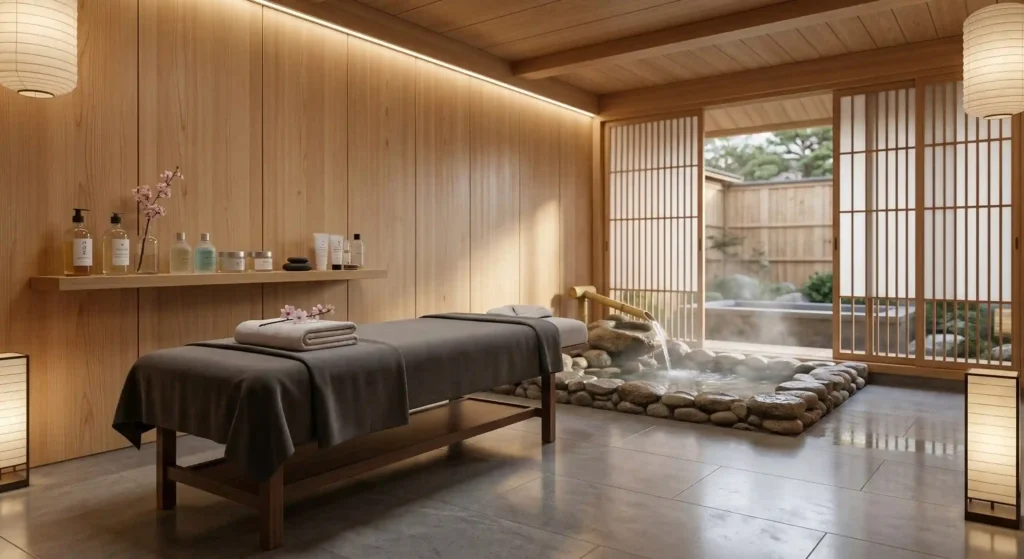
The journey of Japanese nuru massage from a niche bathhouse practice to a global wellness service is a story of careful evolution. Believed to have consolidated as a distinct practice in Japan’s specialist bathhouses during the 1970s and 1980s, the technique underwent a significant process of formalization as it crossed into the mainstream. This transition protected its core principles while adapting them for a new, international audience seeking authentic and effective wellness therapies.
A pivotal moment in the nuru massage evolution was its internationalization in the 2000s. As global interest in Japanese wellness and Asian spa culture expanded, nuru massage found a global audience. The internet was instrumental in this growth, disseminating awareness of the technique far beyond its origins. This newfound visibility spurred a wave of professionalization. As the practice entered mainstream spa menus, clear standards for practitioner training, session protocols—including the use of a dedicated nuru mat, defined session durations, and pre-session hygiene—and client communication were established. This protected the practice’s integrity and distinguished legitimate professional services from informal or unregulated offerings.
By the 2010s, this therapy arrived in India’s urban spa market. Mumbai quickly emerged as the primary access point, driven by its cosmopolitan wellness culture, a high demand for premium at-home experiences, and a pre-existing familiarity with Japanese aesthetics. Today, nuru massage stands as a recognized specialty massage category offered by professional wellness providers worldwide, including in India. Authentic Japanese nuru massage technique remains the foundation of all credible professional training. For a deeper look at how authentic Japanese nuru massage techniques are applied in a professional session, read our dedicated Japanese nuru massage techniques guide.
The Role of Nuru Gel in the Practice’s Evolution
The nuru massage history is inseparable from the history of its signature gel. Initially, the gel was an artisanal, seaweed-based preparation made in-house at Japanese bathhouses. Its formula was a closely guarded component of the service. For the technique to spread globally, this essential tool had to become accessible and consistent.
The development of a standardized, commercially available nuru gel was a critical step in the practice’s evolution. This allowed practitioners outside of Japan to replicate the authentic experience with confidence, knowing the medium would have the correct viscosity, skin-safe properties, and texture. This standardization was essential for professional training and ensuring a consistent, high-quality client experience, no matter the location. Curious about the actual technique involved? Our step-by-step post on how to do nuru massage walks through every stage.
Nuru Massage vs Other Japanese Massage Styles
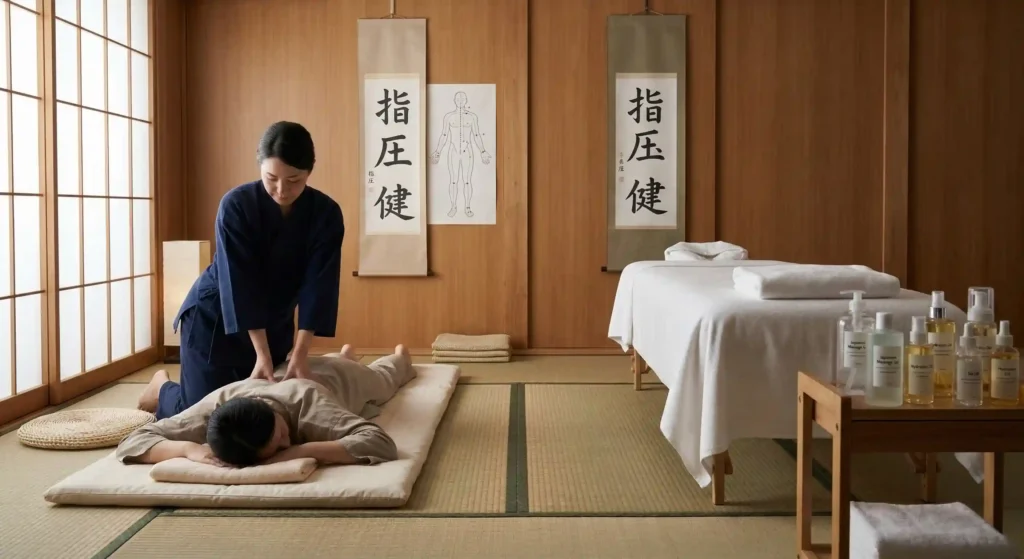
Japan has contributed several globally recognized massage traditions to the world of wellness. Practices like Shiatsu, Anma, and various forms of Japanese reflexology are mainstays in professional bodywork. Japanese nuru massage sits alongside these as a distinct and legitimate category, with its own unique history, philosophy, and application. Understanding the differences is key to choosing the right therapy for your wellness goals.
Shiatsu, for instance, is a clothed, floor-based technique that uses focused finger and palm pressure along the body’s meridian lines. While it shares a Japanese origin and a philosophy of using body weight for pressure with nuru, it is entirely different in practice. There is no skin-to-skin contact or use of a medium. Similarly, Anma is Japan’s oldest recorded massage tradition, a hands-only practice involving kneading, pressing, and tapping. While it shares a “full body treatment” ethos with nuru, it is also a clothed practice.
What makes nuru massage unique among all Japanese massage types is the full-body contact facilitated by the slippery seaweed gel. No other traditional Japanese massage style uses a slick medium between the practitioner and client, nor does any other involve the therapist’s entire body as the primary tool. Nuru uniquely retains its connection to Japanese bathing culture in a way that Shiatsu and Anma do not. The gel, the waterproof mat, and the hygiene ritual all echo its bathhouse origins, setting it apart both technically and philosophically. For a client choosing between Japanese bodywork styles, nuru offers the most immersive sensory experience—it is a full-body, sensation-focused modality rooted in Japan’s bathing heritage.
Quick Comparison: Nuru, Shiatsu, and Anma at a Glance
Nuru Massage: Originating from 20th-century Japanese bathhouse culture, nuru’s defining medium is the slippery seaweed-based gel. The primary contact method is full-body-to-body, with the therapist using their torso, arms, and legs. It is performed on a waterproof mat in a private, temperature-controlled setting.
Shiatsu: Developed in the early 20th century from older Japanese traditions, Shiatsu uses no medium. The primary contact method involves finger, thumb, and palm pressure applied through clothing. Sessions typically take place on a padded mat on the floor.
Anma: As Japan’s most ancient massage form, Anma is also performed without a medium. It uses traditional massage techniques like kneading, tapping, and pressing with the hands. It is a clothed massage, often performed on a floor mat or a massage chair.
For a more contemporary comparison, read our breakdown of nuru vs erotic massage comparison to understand how these two services differ today.
From Japan to the World: Nuru Massage’s Global Journey
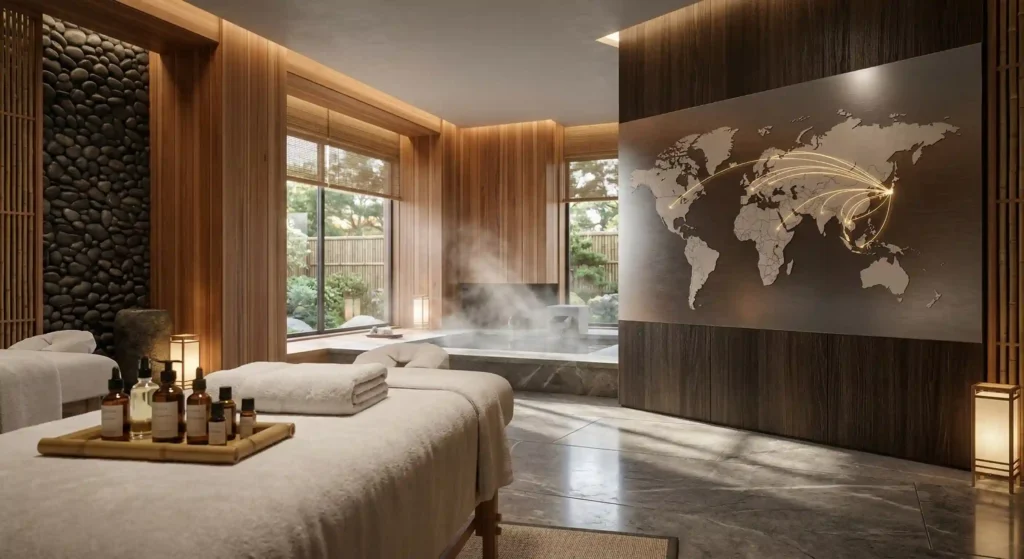
The global expansion of nuru massage began with a first wave across Southeast Asia. By the mid-2000s, destinations like Thailand, Bali, and Singapore adopted the practice, seamlessly integrating it into their existing luxury spa infrastructure. This rapid adoption was driven by a deep regional familiarity with body-based wellness services, allowing the Japanese technique to flourish in premium spa settings. Through the 2010s, the Western market followed suit. As Japanese wellness trends—such as onsen-inspired spas, shiatsu therapies, and Japanese skincare routines—became mainstream in Europe and North America, nuru massage successfully rode the coattails of this broader cultural influence.
As the service expanded internationally, variations naturally emerged. However, protecting the integrity of your wellness experience means understanding what true authenticity looks like. A genuinely authentic session requires four non-negotiable elements: the use of genuine, seaweed-based nuru gel, a rigorously trained practitioner, a specialized waterproof mat, and the traditional full-body application technique as originally practiced in Japan. Refusing to compromise on these standards ensures a safe, effective, and restorative experience.
That global journey eventually brought authentic Japanese nuru massage to India’s major metro cities. From the late 2010s onward, demand surged. The practice initially found a home in high-end hotel spa services before transitioning into professional at-home wellness platforms, making the experience accessible without the need for international travel. Mumbai quickly established itself as India’s nuru capital. Driven by a highly cosmopolitan population, a robust premium home-service market, and a strong concentration of trained wellness professionals, the city now boasts established, reputable providers across multiple neighborhoods.
The shift toward at-home service platforms has been pivotal in this evolution. Rather than commuting to a studio, clients can confidently book a professional session delivered straight to their personal sanctuary. Your therapist arrives with full equipment included, ensuring total privacy and structured care. First-timers often wonder what to expect — our guide on what happens in a nuru massage session answers every question.
Where to Experience Nuru Massage in Mumbai Today
Accessing premium wellness in Mumbai has never been more straightforward or secure. Professional nuru massage in Andheri is available through our verified home-service platform. Similarly, nuru massage in Bandra is bookable with same-day availability for those who prioritize convenience and professional standards. Across the western suburbs — including nuru massage in Goregaon, nuru massage in Malad, and nuru massage in Lower Parel — highly trained therapists are available for secure, private home visits. For clients further east, nuru massage in Powai is also fully covered by our reliable at-home service network.
For full pricing across all Mumbai neighbourhoods, see our breakdown on nuru massage cost Mumbai. Explore available sessions in your area and book a professionally delivered experience today.
Frequently Asked Questions About Japanese Nuru Massage Origins
What does “nuru” mean in Japanese?
“Nuru” (ぬる) is a Japanese word meaning slippery or smooth-to-the-touch. In its reduplicative form “nuru-nuru,” it intensifies that sensation—essentially meaning ultra-slippery. The word belongs to a category of Japanese onomatopoeic texture words called gitaigo. The name was applied to this massage style because the defining quality of the entire experience is the slippery, gliding sensation created by the nuru gel.
Where did nuru massage originate?
Nuru massage is believed to have originated in Kawasaki, Japan, developing within specialist bathhouse establishments during the latter half of the 20th century. It grew out of Japan’s deeply embedded bathing culture—particularly the onsen and sentō tradition—where body-to-body contact in warm, wet environments was already normalised. It later evolved into a professional massage format with a standardised gel and technique.
Is Japanese nuru massage different from shiatsu?
Yes—significantly. Shiatsu is a clothed, pressure-point technique based on meridian theory, applied using thumbs, palms, and elbows. Japanese nuru massage is an unclothed, full-body-contact technique using a slippery seaweed gel as the medium. They share Japanese cultural origins but are entirely different in philosophy, application, and sensory experience. Nuru is rooted in bathing culture; shiatsu is rooted in Chinese medicine tradition.
When did nuru massage become popular internationally?
Nuru massage began gaining international recognition in the early-to-mid 2000s, first spreading through Southeast Asian spa markets in Thailand, Bali, and Singapore. By the 2010s, awareness had grown in Western markets alongside broader Japanese wellness trends. In India, particularly Mumbai, professional nuru massage services became accessible through at-home wellness platforms during the late 2010s and have grown steadily in demand since.
Is nuru massage authentic to Japanese culture?
Yes. Nuru massage has genuine roots in Japanese bathing and bodywork culture, developed within a tradition that places deep value on the sensory, restorative, and social dimensions of physical contact and cleansing. While modern professional nuru massage has been adapted for global spa contexts, its core technique—the gel, the full-body contact, the fluid movement—remains true to its Japanese bathhouse origins.
Conclusion: The Japanese Roots That Make Nuru Massage What It Is
Nuru massage is not a modern invention — it is a practice with genuine cultural depth, rooted in Japan’s centuries-old relationship with water, touch, and physical restoration. By understanding its true origins, from the precise linguistic meaning of the word itself to its foundations in traditional Japanese bathing culture, you gain a deeper appreciation for the therapy. We have traced its careful evolution from specialized bathhouses into a globally respected wellness service, leading to its current availability in major Indian cities like Mumbai.
Your personal wellness deserves the highest standard of care and protection. Choosing an authentic, professionally delivered session ensures you receive the true restorative benefits of this practice in a safe, structured environment without uncertainty. If you’re comparing nuru massage to similar services, our guide on erotic nuru vs happy ending massage gives a clear, honest breakdown.
Ready to experience this tradition for yourself? Explore our professional nuru massage service Mumbai and book a session at home. Experience authentic Japanese nuru massage in Mumbai — brought to your door by trained professionals who respect both the technique and the tradition behind it.